Getting Started with Invoicing: A Guide for New Freelancers
Learn the basics of creating professional invoices and getting paid on time as a freelancer.
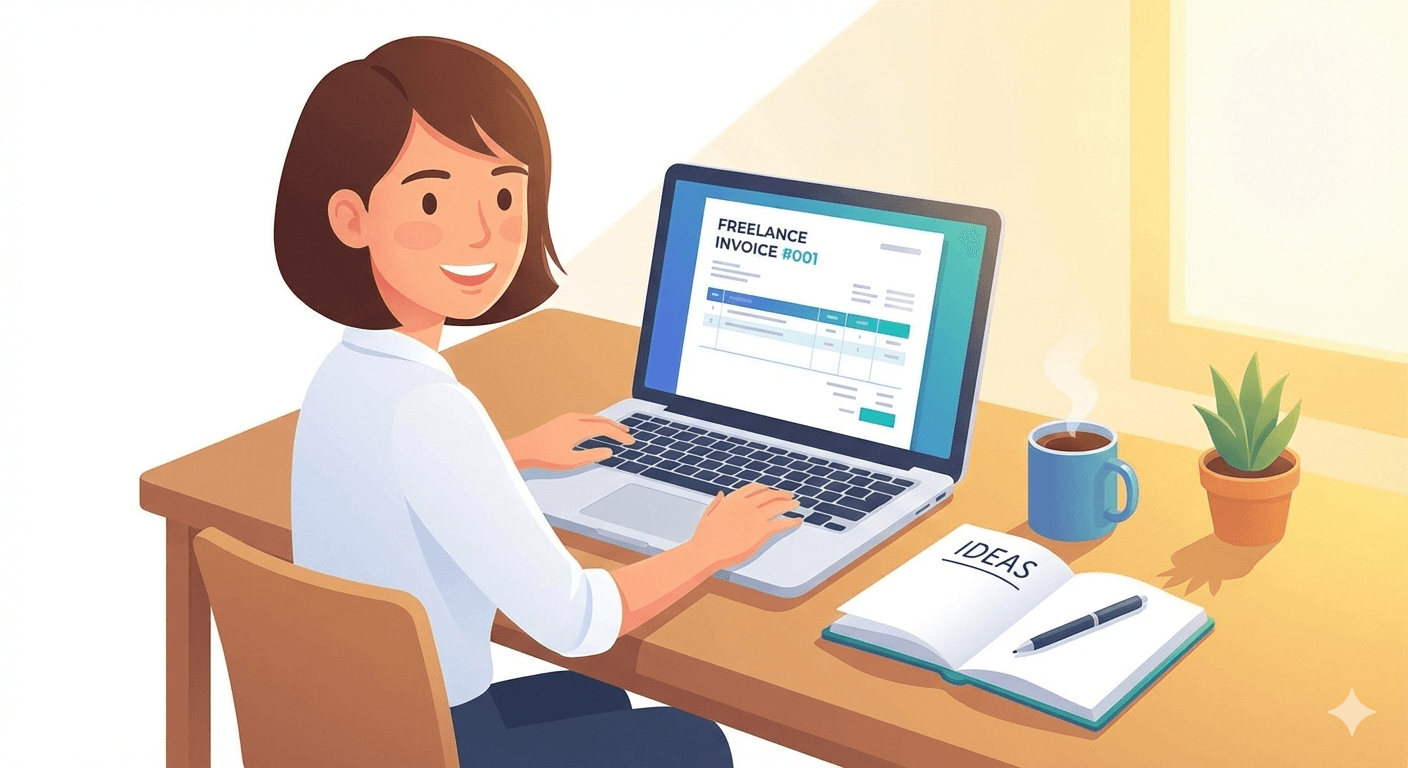
Starting your freelance journey is exciting, but getting paid shouldn't be complicated. Whether you've just landed your first client or you're transitioning from full-time employment, understanding how to invoice properly is one of the most important skills you'll need. This guide will walk you through everything you need to know about invoicing as a new freelancer.
What is an Invoice?
An invoice is a formal document that you send to clients requesting payment for services rendered. It's not just a formality—it's a crucial business record that helps you get paid, track your income, and stay compliant with tax regulations. Think of it as a professional "bill" that documents what work you did, when you did it, and how much you're owed.
Unlike a quote or estimate (which comes before the work), an invoice comes after you've completed the project or reached a billing milestone. It creates a paper trail that protects both you and your client, making it clear exactly what's being paid for.
Essential Elements of an Invoice
Every professional invoice should include several key pieces of information. Missing any of these can delay payment or cause confusion:
- Your business name and contact information – Include your trading name, address, email, and phone number
- Client's name and contact information – The person or company you're billing
- Unique invoice number – A sequential number that identifies this specific invoice
- Invoice date and due date – When the invoice was issued and when payment is expected
- Detailed description of services – What work you completed, with enough detail that the client knows exactly what they're paying for
- Payment terms and methods – How and when you expect to be paid
- Total amount due – The final amount including any taxes or fees
If you're VAT registered, you'll also need to include your VAT number, the VAT rate applied, and the VAT amount separately from the net total.
Best Practices for Getting Paid Faster
Send invoices promptly after completing work. The faster you invoice, the faster you get paid—and the fresher the project is in your client's mind. Ideally, send your invoice within 24-48 hours of completing the work. If you're working on a longer project, consider invoicing at milestones rather than waiting until the very end.
Set clear payment terms upfront, before you start work. Common terms include "Due on receipt," "Net 14" (payment due within 14 days), or "Net 30" (payment due within 30 days). Whatever terms you choose, make sure your client agrees to them before you begin. Put them in your contract and reiterate them on every invoice.
Make it easy for clients to pay you. Offer multiple payment methods if possible—bank transfer, card payment, or online payment services. The fewer obstacles between your client and their payment, the faster you'll get paid. Include all relevant payment details directly on the invoice so they don't have to go searching.
Keep It Simple
Don't overcomplicate your invoices. Clear, professional, and easy-to-understand invoices get paid faster than complex ones. Use plain language in your descriptions, break down costs logically, and make sure the total amount due is prominently displayed. Your client should be able to glance at the invoice and immediately understand what they're paying for and how much it costs.
Avoid jargon or overly technical descriptions unless your client specifically needs them for their records. "Website development - homepage redesign" is clearer than "Phase 2 deliverables per SOW section 3.2."
Following Up on Overdue Invoices
Even with the best practices, some invoices will become overdue. Don't take it personally—most late payments aren't intentional. Clients get busy, invoices get lost in email, or payment systems have delays. A friendly, professional follow-up usually solves the problem.
Send a gentle reminder a few days after the due date. Keep it polite and assume good faith. Something like: "Hi [Name], I hope you're well. I wanted to check in on invoice #001 which was due on [date]. Please let me know if you have any questions or if there's anything I can help with to process the payment."
If you still don't receive payment after a week or two, follow up more firmly but still professionally. Most freelancers find that a phone call is more effective than email at this stage. Stay calm, stay professional, and keep records of all your communication.