Why Invoice Numbering Matters for UK Freelancers (and How to Get It Right)
Learn why HMRC requires sequential invoice numbers, common mistakes freelancers make, and how to fix broken sequences. Plus legal requirements explained.
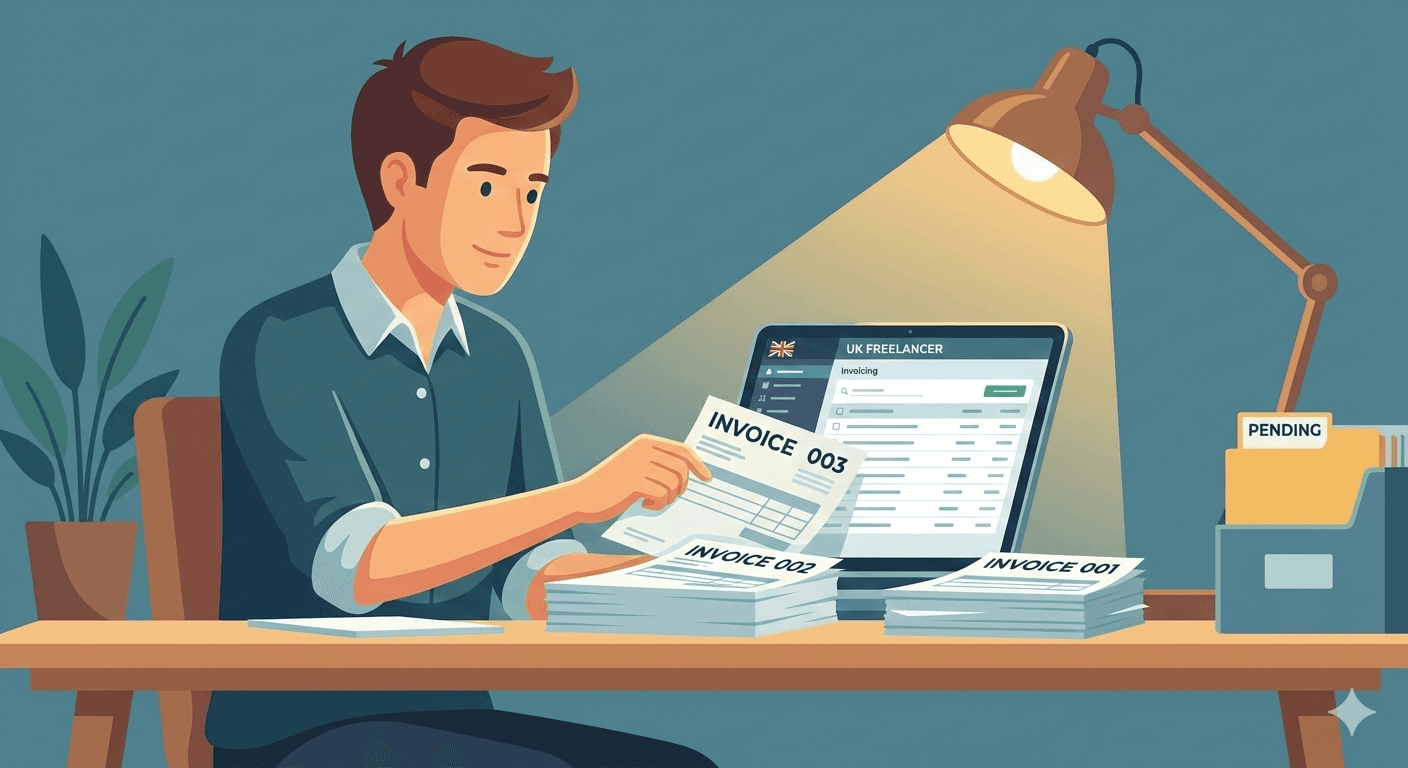
You've finished the project, sent the invoice, and now you're waiting to get paid. But have you thought about your invoice number lately? If your answer is "not really" or "I just make them up as I go," you're not alone. Invoice numbering feels like the boring administrative bit nobody warns you about when you go freelance. But here's the thing: HMRC actually cares about your invoice numbers. A lot.
Get your invoice sequencing wrong, and you could face awkward questions during a tax investigation, difficulty proving your income, or even penalties. Get it right, and you'll have rock-solid records that protect you and make tax time infinitely easier. Let's break down everything you need to know about invoice numbering as a UK freelancer.
What Is Invoice Sequencing (And Why Does It Exist)?
Invoice sequencing is simply the practice of numbering your invoices in consecutive order. Invoice 001, then 002, then 003, and so on. No skipping numbers, no random digits, no "making it look more professional" by starting at 1000. The concept exists for one primary reason: to prevent fraud.
If you could number invoices randomly, you could theoretically issue Invoice 45 in January and Invoice 12 in December, making it impossible for HMRC to audit your income properly. Sequential numbering creates an audit trail that proves every invoice you've issued. For HMRC, your invoice numbers should tell a story. They should show steady business activity, clear progression through the tax year, and no mysterious gaps that suggest hidden income.
What HMRC Actually Requires
HMRC doesn't publish a 50-page guide on invoice numbering (thankfully), but the requirements are clear in their guidance for self-employed individuals and sole traders. Here's what you legally need:
Each invoice must have a unique sequential number. This is non-negotiable. Your numbers must follow a logical sequence that anyone reviewing your records can understand. The good news? HMRC is flexible about the format. You can use:
- Simple numbers: 1, 2, 3, 4...
- Zero-padded numbers: 001, 002, 003...
- Year-prefixed numbers: 2025-001, 2025-002...
- Letter-number combinations: INV-001, INV-002...
- Client-specific sequences: CLIENT-001, CLIENT-002... (though this gets complicated fast)
What matters is consistency and sequence. Pick a format and stick to it.
You must keep these records for at least 6 years. This applies to all your invoices, whether paid or unpaid. HMRC can investigate your tax affairs going back six years (or up to 20 years in cases of deliberate fraud), so your invoice records need to match that timeline.
Your invoices must be traceable. If HMRC asks to see Invoice 047, you need to produce it. If there's a gap between Invoice 045 and Invoice 048, you need to explain what happened to 046.
Common Invoice Numbering Mistakes Freelancers Make
Let's talk about the mistakes I see constantly. Some are harmless but messy. Others could genuinely cause problems.
Starting at 1000 to "Look Established"
Many new freelancers feel embarrassed about Invoice 001. It screams "I just started yesterday." So they begin at 1000 instead, hoping clients will think they're more experienced. HMRC doesn't care if you're embarrassed. They care about the audit trail. Starting at 1000 means you're creating 999 phantom invoices that don't exist.
Is this illegal? Not technically. Will it raise questions during an investigation? Absolutely. You'll need to explain why your business supposedly issued 1000 invoices that can't be found anywhere. Just start at 1. Your early clients won't care, and the ones who do aren't the clients you want anyway.
Skipping Numbers After Cancelled Invoices
You create Invoice 025, realise you made a mistake, delete it, and move straight to Invoice 026. This feels tidy, but it's wrong. Invoice 025 existed. Even if you voided it or cancelled it, that number is now part of your sequence. You can't pretend it never happened.
The correct approach: Keep Invoice 025 in your records, mark it as "VOID" or "CANCELLED," and include a note explaining why. Then continue with Invoice 026.
Using Random Numbers for Different Clients
Some freelancers create separate numbering systems for each client, thinking it looks more organised. Client A gets invoices starting at A-001, Client B gets B-001, and so on. This creates chaos for your tax records. HMRC wants to see all your invoices in one clear sequence. Multiple sequences mean more complexity, more room for error, and more explaining to do if you're ever investigated.
Stick to one master sequence for all clients unless you're running genuinely separate business entities (which most freelancers aren't).
Restarting the Sequence Each Year
Some freelancers reset their invoice numbers on January 1st, starting fresh at 001 each year. This isn't illegal, but it's not ideal. You end up with multiple Invoice 001s, Invoice 002s, etc. To make them unique, you need to include the year in every reference, which adds complexity.
The simpler option: Just keep counting. Invoice 001 through infinity. Your tenth-year invoices might hit five digits, but that's fine. Higher numbers show longevity, not inexperience.
Creating Invoices Out of Sequence
This is the big one. You issue Invoice 050 in March and Invoice 045 in April. Maybe you forgot to invoice someone. Maybe you use different devices and they're not synced. Whatever the reason, this is a red flag for HMRC. Out-of-sequence invoices suggest hidden income, backdating, or creative accounting. Even if your reasons are innocent, you'll have significant explaining to do.
Best Practices for Invoice Numbering
Let's move from "what not to do" to "what actually works."
Choose a Clear, Consistent Format
Pick a numbering format and never deviate. Here are the most common options:
Simple sequential (1, 2, 3, 4...) is clean and straightforward with no confusion, but doesn't encode any useful information like the year or client.
Zero-padded (001, 002, 003...) looks tidy and sorts correctly in file systems, but you need to decide upfront how many digits to use (001 vs 0001 vs 00001).
Year-prefixed (2025-001, 2025-002...) makes it easy to identify which year an invoice belongs to, but requires restarting each year which creates duplicate base numbers across years.
Custom prefix (INV-001, QAZ-001...) looks professional and can include your branding, but adds slightly more characters to type and reference.
My recommendation? Start with simple sequential or zero-padded numbers. Add prefixes only if they genuinely help you organise your records.
Never Skip or Reuse Numbers
This bears repeating: every number in your sequence is permanent. Once assigned, it stays assigned forever, even if the invoice is cancelled. If you void an invoice, mark it clearly as cancelled but keep the number in your sequence. This creates a complete audit trail with no gaps.
Keep Voided Invoices in Your Records
When you cancel an invoice, don't delete it. Keep it in your records with a clear note:
- Mark it as "VOID," "CANCELLED," or "NOT ISSUED"
- Add the date it was voided
- Include a brief reason (e.g., "Duplicate," "Client cancelled project," "Incorrect amount")
- Store it with your other invoices
This way, if HMRC asks about the gap, you have immediate proof.
Use Software That Handles Sequencing Automatically
Here's the truth: manual invoice numbering is tedious and error-prone. You'll forget which number you're on. You'll accidentally skip one. You'll issue duplicates. Good invoicing software assigns numbers automatically, in perfect sequence, every single time. You can't accidentally skip. You can't reuse. You can't mess it up. This is one of those rare situations where the lazy option is also the legally correct option.
Document Your Numbering System
Write down your numbering format somewhere. It doesn't need to be formal, just clear. For example: "Invoices numbered sequentially starting from 001, issued in chronological order. Prefix 'INV-' added for clarity. Voided invoices marked as cancelled and retained in records." If you're ever questioned, this documentation shows you had a deliberate system, not random chaos.
What Happens If You Mess Up Your Sequence?
Let's say you're reading this and thinking, "Oh no, I've already made these mistakes." What now? First, don't panic. HMRC isn't monitoring your invoice numbers in real-time. Most freelancers never face an investigation. The goal here is to protect yourself IF you're ever investigated, not to live in fear. If your sequences are already broken, here's how to fix them:
Option 1: Clean Up and Continue (For Minor Issues)
If you have a few skipped numbers or out-of-sequence invoices, fix it going forward:
- Document the issues you've found
- Create voided placeholders for any skipped numbers
- Add notes explaining the errors
- Start issuing new invoices in perfect sequence
This creates a clear "before and after." You acknowledge past mistakes but demonstrate you've corrected them.
Option 2: Start Fresh (For Major Issues)
If your numbering is completely chaotic, consider starting a new sequence:
- Close your old sequence with a final "reconciliation" document listing all issued invoices
- Start a new sequence with a new prefix or format (e.g., switching from random numbers to 2025-001)
- Document why you made the change
- Keep all old records for the required 6 years
This is more drastic, but sometimes necessary. The key is documentation showing the change was deliberate, not an attempt to hide something.
Option 3: Get Professional Advice
If you're genuinely worried about HMRC implications, talk to an accountant. They can review your records, advise on the best fix, and provide documentation that protects you. This is especially important if you're approaching the VAT threshold (currently £90,000), you're already VAT registered, you've received any communication from HMRC, or you're being investigated for any reason. Professional advice here is worth far more than the cost.
VAT Considerations
If you're VAT registered (or approaching the £90,000 threshold), invoice numbering becomes even more critical. VAT invoices must include a unique sequential number by law. This isn't guidance or best practice; it's a legal requirement. Mess this up and you're not just creating audit headaches, you're violating VAT regulations.
VAT-registered freelancers should:
- Ensure every VAT invoice has a unique sequential number
- Never reuse or skip numbers
- Keep VAT invoices separate from non-VAT quotes or proforma invoices (which can use different numbering)
- Retain all VAT invoices for 6 years minimum
If you're close to the VAT threshold, sort your invoice numbering now, before registration becomes mandatory. It's much easier to fix when the stakes are lower.
How Qazua Handles Invoice Sequencing Automatically
This is exactly the kind of tedious-but-critical detail that software should handle for you. When you create an invoice in Qazua, the system automatically assigns the next sequential number. You can't skip one. You can't reuse one. You can't mess it up, even if you try.
If you void an invoice, Qazua keeps it in your records, marked clearly as cancelled, preserving the sequence. You get a complete audit trail without having to think about it. Your records are stored securely and accessible for as long as you need them (definitely longer than HMRC's 6-year requirement). If you ever need to prove your income, provide documentation, or respond to HMRC queries, everything is there, perfectly organised.
It's one less thing to worry about. Which, as a freelancer juggling clients, projects, and deadlines, is exactly what you need.